
Bristol 27
About the Bristol 27
Researched from public sources for this model. Any individual boat may have been modified or repowered — confirm before relying on any figure.
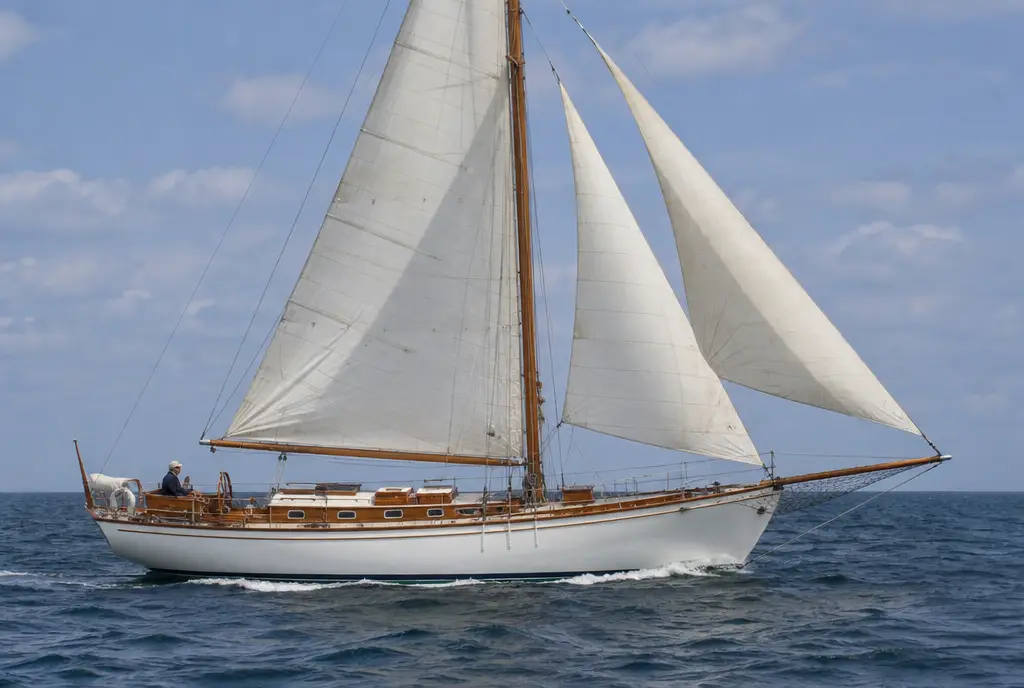
- Builder
- Bristol Yachts
- Designer
- Carl Alberg
- Length
- 27.16 ft
- Waterline
- 19.75 ft
- Beam
- 8 ft
- Draft
- 4 ft
- Displacement
- 6,600 lb
- Ballast
- 2,575 lb
- Hull
- fiberglass
- Hull / keel
- full keel
- Rig
- sloop
- Propulsion
- inboard
- Fuel
- 22 gal
- Water
- 20 gal
- Stern thruster
- none
- Steering
- tiller
Sources disagree on first year, last year, number built — left blank rather than guessed.
Alberg cutaway full keel with attached rudder; prop in a protected aperture on inboard boats. Production dates and numbers vary: sailboatdata says 1966-1978 and 337 built (brochure dimensions); Practical Sailor says first boat 1965, perhaps 400 or more built into the mid-1970s; Sailing Magazine estimates 300-350. Three versions: early outboard-well boats, then inboards (Atomic 4 or occasional Westerbeke 10 hp diesel); taller rig and a Weekender (short cabin, long cockpit) also offered. Solid hand-laid hull, deck and cabin one molding, lead ballast encapsulated. Two interior layouts (dinette version most popular). Most boats have likely been repowered.
Known problems for this model
-
Leaking hull-deck joint deck
Many owners report leaks at the through-bolted, caulked hull-deck joint; a lasting fix means pulling and rebedding the bolts, which can be hard to reach.practical-sailor.com · sailingmagazine.net
-
Outboard-well boats underpowered and corrosion-prone engine
Early boats carried an outboard in a cockpit well: the lower unit sits in the water and corrodes, the well can flood, and the motor struggles to windward. Practical Sailor strongly prefers inboard boats.practical-sailor.com · sailingmagazine.net
-
Gelcoat crazing deck
Gelcoat cracking and crazing is common on these old decks but usually cosmetic and can be filled before repainting.sailingmagazine.net
-
Light stanchions and pulpits, old roller-reefing boom rigging
Consider beefing up stanchions and pulpits if not already done; the original worm-gear roller-reefing gooseneck never worked well.sailingmagazine.net
-
Tender initially other
Several owners find the boat tender and reef early, around 12 knots; one added 500 lb of ballast.practical-sailor.com
Engines & parts
Universal Atomic 4 parts: good
Factory standard engine — you entered “Universal Atomic 4”
Tens of thousands were built (sources say from 40,000 to 50,000). Despite being out of production for decades, the engine is well supported: Moyer Marine sells parts, rebuilt engines, fuel pump rebuilds and exhaust parts, and hosts an owners' forum; Old Lyme Marina and others also supply parts, and electronic ignition upgrades are available.
Parts sources: Moyer Marine
Common problems (3)
-
Raw-water cooling scale and corrosion cooling
Most Atomic 4s are raw-water cooled, so the block scales up and corrodes, especially in salt water; cranking without starting can also flood the engine with seawater through the exhaust.goodoldboat.com · moyermarineforum.com · keelindex.com
-
Gasoline vapor fire/explosion risk fuel
Gasoline vapor is heavier than air and settles in the bilge, so ventilation, blower use and shutting the fuel valve (a stuck carburetor float can overflow) matter.goodoldboat.com
-
Ignition and fuel system faults electrical
Points, condenser, cap and wires, plus gummed carburetors and contaminated fuel, are the most common reasons an Atomic 4 won't run well.keelindex.com · goodoldboat.com
Sources disagree on first year, last year, number built — left blank rather than guessed.
Model sources (3)
sailboatdata.com · practical-sailor.com · sailingmagazine.net
Other Bristol models
- Bristol 29.9 1977–1986
- Bristol 32 1966–1983
- Bristol 35.5 1977–?
Researched from public sources. Spotted an error? The sources are listed above — tell us what they got wrong.