
Hunter 30
Built 1973–1983 by Hunter Marine
About the Hunter 30
Researched from public sources for this model. Any individual boat may have been modified or repowered — confirm before relying on any figure.
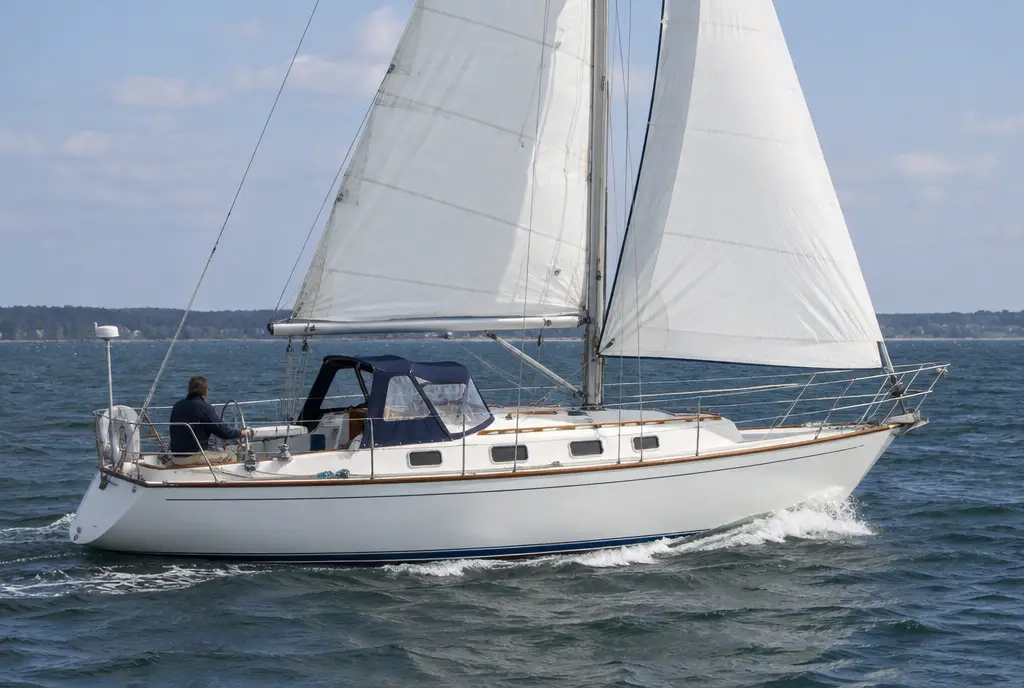
- Built
- 1973–1983
- Builder
- Hunter Marine
- Designer
- John Cherubini
- Length
- 30.4 ft
- Waterline
- 25.75 ft
- Beam
- 10.17 ft
- Draft
- 5.25 ft
- Displacement
- 9,700 lb
- Ballast
- 4,100 lb
- Hull
- fiberglass
- Hull / keel
- fin keel
- Rig
- sloop
- Propulsion
- inboard
- Fuel
- 12 gal
- Water
- 33 gal
- Stern thruster
- none
Sources disagree on notes only value — left blank rather than guessed.
Fin keel with skeg-hung rudder, 5.25 ft deep; shoal keel optional (depth disputed, see disputed[]) and a keel/centerboard version existed. Tall-rig option. Kit version sold as the Quest 30. Engines: Yanmar 12 hp for the first years, 15 hp after 1978, later 18 hp. T-cockpit from after the 1980 models. Hulls built: sailboatdata gives 1000, PS says more than 1,000 (some sold as Quest 30 kits).
Known problems for this model
-
Balsa-cored deck delamination deck
Solid glass hull but balsa-cored deck; PS advises checking for delamination, and one test boat had a delaminated cockpit sole and seats.practical-sailor.com · sailboatdata.com
-
Painted-on nonskid worn away deck
Early Hunters used a painted aggregate nonskid rather than molded texture, so most boats now need the nonskid redone.practical-sailor.com
-
Compression post / cabin top sag at mast hull
PS says many of these Hunters have had compression post problems; look for the cabinhouse sagging around the mast step.practical-sailor.com
-
Poor engine access, noisy early Yanmar engine
The engine sits behind the companionway steps and owners call access very poor; the stuffing box is reached through a quarter-berth panel. The original 12 hp was noisy and prone to vibration, so check alignment, mounts and the strut.practical-sailor.com
-
Shaft removal blocked by skeg running gear
The full skeg ahead of the rudder means the engine or skeg has to come out to pull the prop shaft. On shoal-keel boats the skeg is also exposed in a grounding.practical-sailor.com
1 more
-
Factory quality-control faults other
Owners reported fuel return lines hooked up wrong, chafed hoses, leaking ports, poorly installed exhausts and weak joinery and hinges. A water-damaged teak-veneer sole usually has to be replaced, not repaired.practical-sailor.com
Engines & parts
Yanmar 2GM / 2GM20F parts: good
Factory common repower engine — you entered “Yanmar 2GM20F”
Well supported by Yanmar dealers and aftermarket; stainless mixing elbows that replace the OEM part numbers are widely sold.
Parts sources: Mack Boring & Parts (Yanmar distributor), HDI Marine (stainless exhaust elbows), Parts4Engines
Common problems (2)
-
Nearly blocked mixing elbow exhaust
Owners find the exhaust port of the mixing elbow almost completely blocked while the engine still runs; a failed U-elbow has also let water into a cylinder and cracked a piston.sailnet.com · practical-sailor.com
-
Noise and vibration from soft mounts engine
Worn soft engine mounts are a common cause of the vibration owners complain about; better aftermarket mounts are available.practical-sailor.com
Model sources (5)
sailboatdata.com · practical-sailor.com · goodoldboat.com · en.wikipedia.org · listingsport.com
Other Hunter models
- Hunter 27 1975–1984
- Hunter 33 1977–?
- Hunter 336 1995–?
- Hunter 34 1983–1987
- Hunter 356 2000–?
Researched from public sources. Spotted an error? The sources are listed above — tell us what they got wrong.