
Bowline
Loop · moderate
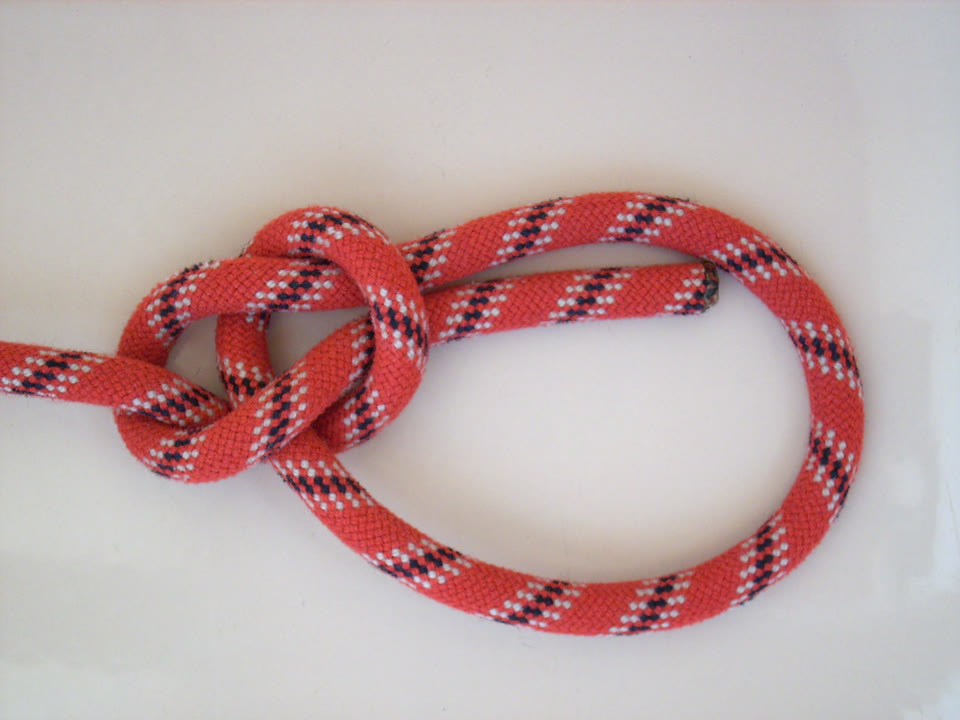
Used for
- Putting a fixed eye in a dock line to drop over a piling or cleat when the line has no spliced eye
- Tying a line to the eye of a fender
- Tying a jib sheet to the clew or a halyard to the head of a sail
- An emergency loop a person in the water can put around themselves to be hauled in
How to tie it
- Decide how big the eye needs to be and leave that much line, plus a tail, beyond where you will tie.
- Make a small overhand loop in the standing part, with the part toward the end lying on top.
- Pass the end up through the small loop from underneath.
- Take the end around behind the standing part.
- Bring the end back down through the small loop, next to where it came up.
- Hold the end and the side of the eye beside it together, and pull the standing part to set the knot.
Check it: The tail finishes inside the big eye, lying alongside one side of it, and a collar of line wraps around the standing part. If the tail ends up outside the eye, you have tied a variant (the cowboy or Dutch bowline), not the standard bowline; retie it.
Cautions
- A bowline can shake loose when it is not under load or is loaded and slackened over and over, such as a flogging jib sheet. Leave a good tail and check it; the Army backs it up with an overhand knot in the tail.
- It is meant to be loaded along the standing part. A sideways pull on the eye can make it slip or capsize.
- Take the load off before trying to untie it.
To untie: With the load off, push the collar away from the eye to break it open.
Sources (7)
media.defense.gov · higherlogicdownload.s3.amazonaws.com · boatingcompass.org · globalsecurity.org · en.wikipedia.org · discoverboating.com · americansailing.com
General guidance for recreational boaters, researched from the sources listed and written in our own words. Your equipment manuals, local knowledge, the Navigation Rules and a qualified instructor come first.