
Clove hitch
Hitche · easy
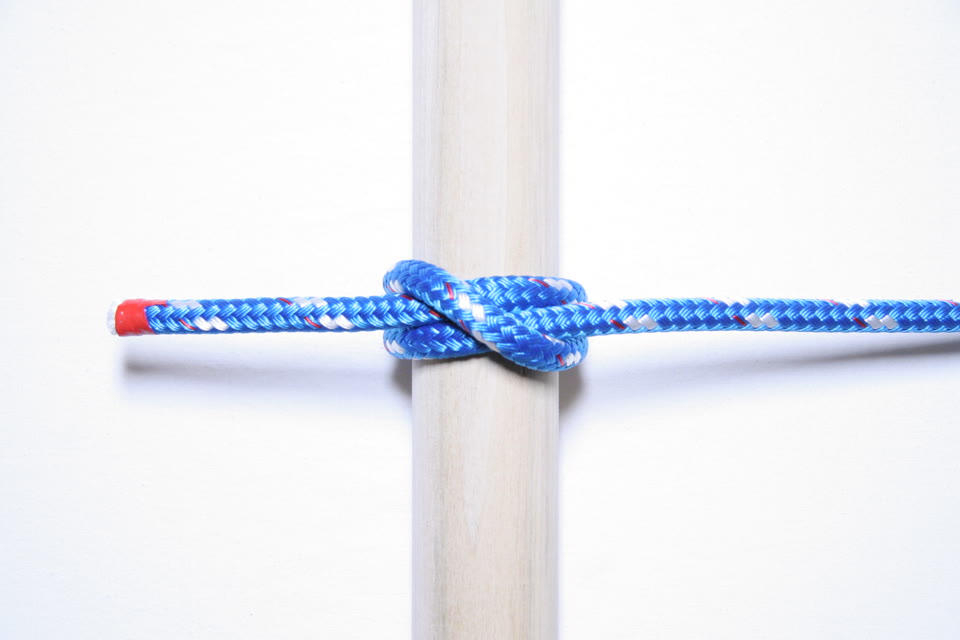
Used for
- Hanging a fender from a rail or stanchion, where you want to slide it up or down to set the height
- A quick, temporary tie to a piling or post while you sort out proper lines
- Bending a heaving line onto a heavier line before passing it across
- Starting or finishing a lashing on a dinghy, cover or awning frame
How to tie it
- Pass the end of the line around the post or rail.
- Bring the end across the front of the standing part so the two make an X.
- Take a second turn around the post in the same direction, beside the first.
- When the end comes round to the front again, tuck it under the diagonal crossing.
- Pull the end and the standing part in opposite directions to close the turns up.
- If it will be left alone or the pull will come and go, add one or two half hitches around the standing part.
Check it: On the front there is one diagonal crossing, and the two ends come out from under it heading in opposite directions. On the back the two turns lie neatly side by side.
Cautions
- A clove hitch only holds well under a steady pull. When the load comes and goes it can loosen, rotate or work its way out, so back it up with half hitches for anything that matters.
- On a fender, the hull rubbing and lifting the fender can work the hitch loose and drop the fender. Once the height is right, lock it with a couple of half hitches.
- It grips poorly on square or flat-sided posts; it is meant for round ones.
- Do not leave the boat held only by clove hitches.
To untie: Take the strain off and push the two turns toward each other; the hitch opens easily.
Sources (7)
media.defense.gov · higherlogicdownload.s3.amazonaws.com · boatingcompass.org · globalsecurity.org · en.wikipedia.org · boatingwithdawsons.com · americansailing.com
General guidance for recreational boaters, researched from the sources listed and written in our own words. Your equipment manuals, local knowledge, the Navigation Rules and a qualified instructor come first.