
Rolling hitch
Hitche · moderate · also called Magnus hitch
Used for
- Taking the load off a sheet jammed on a winch by an override, so the turns can be cleared
- Tying a line to another line that is under load and cannot be untied
- Making a line fast to a piling or spar where the pull runs along it rather than across it
How to tie it
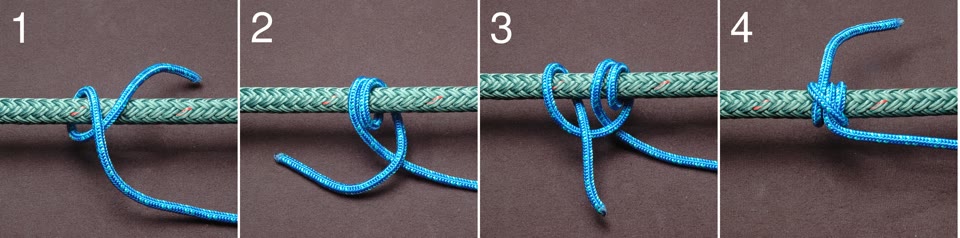
- Work out which way your new line will pull along the loaded line. The knot only grips against pull in that one direction.
- Wrap the end of your line around the loaded line on the side your line will pull toward, bringing it back over the top of your own standing part.
- Take a second wrap right beside the first, still on the pull side, again crossing over your standing part.
- Carry the end across to the other side of your standing part and take one more turn around the loaded line.
- Tuck the end under that last turn, the same way you finish a clove hitch.
- Push the turns together and snug the knot hard before any load goes on it.
- Add a half hitch around your standing part for extra security.
Check it: Two wraps sit side by side on the side your line pulls toward, with your standing part leading out across them, and a single hitch sits on the other side. Pull gently along the loaded line in the planned direction: it should grip, not slide.
Cautions
- It holds against pull in one direction only. Pulled the other way it slides.
- On slippery modern line, and on small line, it may not grip well; Practical Sailor's tests found it unreliable with modern synthetic rope. Load it slowly and watch it before trusting it.
- Pull along the loaded line, not out at right angles; a sideways pull makes it much less dependable.
- While the load transfers, keep hands and body clear of the jammed winch and out of the line's path.
To untie: Take the load off and the turns loosen and slide off easily.
Sources (6)
higherlogicdownload.s3.amazonaws.com · en.wikipedia.org · christinedemerchant.com · marines.mil · boatus.com · navytribe.com
General guidance for recreational boaters, researched from the sources listed and written in our own words. Your equipment manuals, local knowledge, the Navigation Rules and a qualified instructor come first.