
Trucker's hitch
Hitche · moderate
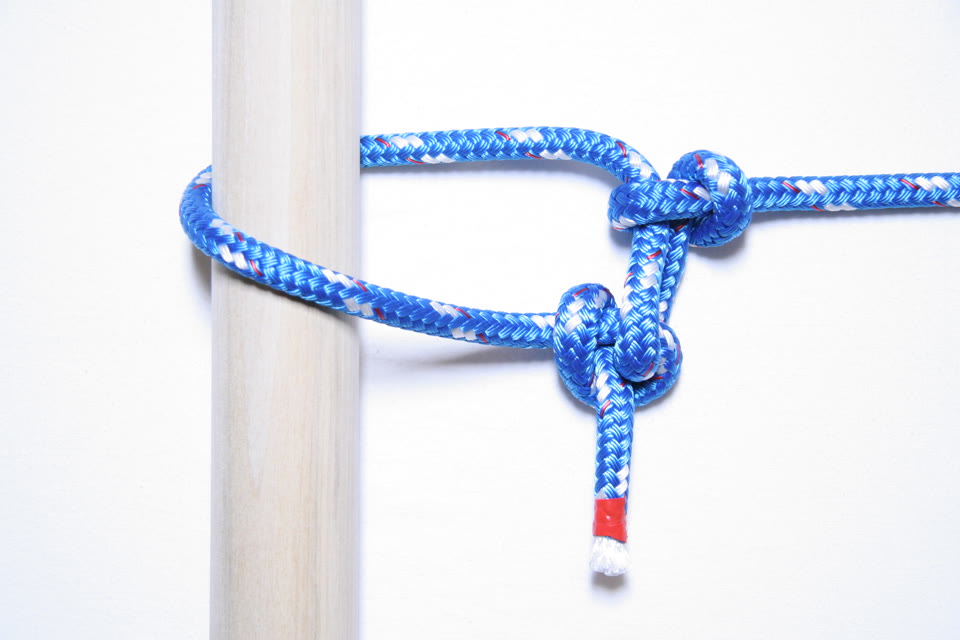
Used for
- Snugging down lashings on a dinghy, kayak or gear carried on deck
- Tightening the tie-downs on a boat cover or winter tarp
- Securing a small boat or canoe to a trailer or roof rack
How to tie it
- Tie one end to the first anchor point with a bowline or other secure knot.
- Partway along the line, tie a fixed loop, such as a figure-eight loop.
- Pass the free end around the second anchor point: a ring, cleat, rail or trailer fitting.
- Bring the end back and pass it through the loop you tied.
- Haul on the end to tighten. The loop works like a pulley and multiplies your pull.
- Pinch the line against the loop to hold the tension while you tie off.
- Tie the end off with half hitches, making the last one slipped if you want a quick release.
Check it: The line runs from the first anchor to your loop, around the second anchor, back through the loop and on to the half hitches, and the lashing stays tight when you pluck it.
Cautions
- Make the loop a fixed loop if the load matters. Versions using a slipknot or sheepshank are quicker but can fall apart.
- The pulley effect multiplies your pull, so go easy on soft covers, hatches and small boats.
- The line wears where it runs through the loop; tie the loop in a fresh spot now and then.
- Under a big load a plain half hitch can jam; a slipped one is easier to release.
To untie: Keep hold of the line, pull the slip (or undo the half hitches), and let the tension off gradually.
Sources (2)
General guidance for recreational boaters, researched from the sources listed and written in our own words. Your equipment manuals, local knowledge, the Navigation Rules and a qualified instructor come first.