
Tartan 27
Built 1961–1980 by Tartan Marine
About the Tartan 27
Researched from public sources for this model. Any individual boat may have been modified or repowered — confirm before relying on any figure.
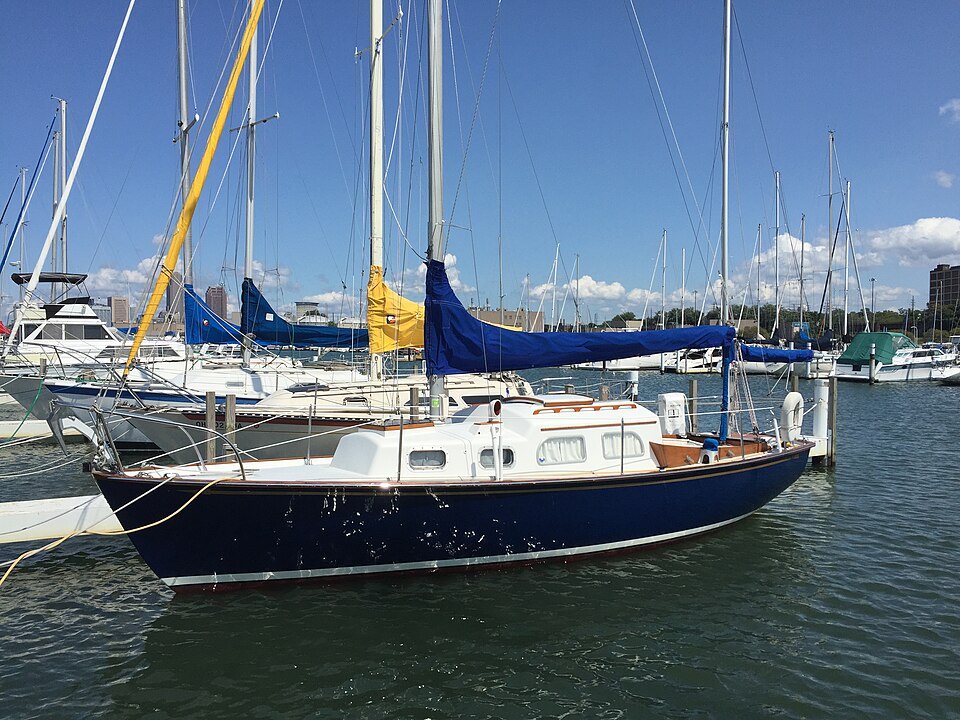
- Built
- 1961–1980
- Builder
- Tartan Marine
- Designer
- Sparkman & Stephens
- Length
- 27 ft
- Waterline
- 21.42 ft
- Beam
- 8.62 ft
- Draft
- 3.17 ft
- Ballast
- 2,400 lb
- Hull / keel
- centerboard
- Rig
- sloop
- Propulsion
- inboard
- Fuel
- 20 gal
- Water
- 30 gal
- Number built
- 712
- Stern thruster
- none
- Steering
- tiller
Sources disagree on displacement — left blank rather than guessed.
Production began in 1961 (early boats built by Douglass & McLeod; W.D. Schock built 25 under license 1965-68). Practical Sailor gives 712 built, none in 1972 due to a factory fire. Ballast was changed from external to encapsulated in the mid-1960s (sailboatdata says 1967, PS says 1966). A 1977-79 update (about 64-65 boats, sometimes called the 27-2) raised the sheer and redesigned the deck and interior. Keel/centerboard: 3.17 ft board up, 6.33 ft down. Displacement is disputed (see disputed). Atomic 4 fitted to about 85% of boats; Farymann 12 hp diesel offered from about 1975. Yawl rig was available. Deck is balsa-cored; hull coring not mentioned by sources. Hull material (solid vs cored) not stated by sources read; deck is balsa-cored.
Known problems for this model
-
Balsa deck delamination at chainplates deck
The most-cited problem is water getting into the balsa-cored deck, especially around poorly bedded chainplates; it is hard to repair once widespread.practical-sailor.com
-
Rotted wood under mast step hull
Many boats have wooden supports under the mast step that rot from partner leaks and can let the step collapse; nearby bulkheads can also be water-damaged.practical-sailor.com
-
Centerboard pivot wear and pennant chafe hull
The glass-encapsulated steel board can wear at the pivot and hang only on its pennant, and the pennant can chafe through its tube, weakening the wire and causing a leak.practical-sailor.com
-
Rudder post wear and tiller head fitting steering
There is no bearing between rudder post and tube, so wear causes slop and noise; the tiller head fitting can wear or crack.practical-sailor.com
-
Leaking fuel tanks fuel
Various fuel tanks were fitted over the years and some leak, which is serious on a gasoline boat.practical-sailor.com
2 more
-
Aging Atomic 4 / costly Farymann parts engine
Check Atomic 4s for low compression, leaks, electrical corrosion and cracked mounts; the Farymann diesel is dependable but parts are expensive and its vibration loosens mounts and fittings.practical-sailor.com
-
Outward hull-deck flange and rubrail damage deck
The outward-turned hull-deck flange is harder to repair if damaged and the teak rubrail breaks often, though the joint rarely leaks.practical-sailor.com
Engines & parts
Universal Atomic 4 parts: good
Factory standard engine — you entered “Universal Atomic 4”
Tens of thousands were built (sources say from 40,000 to 50,000). Despite being out of production for decades, the engine is well supported: Moyer Marine sells parts, rebuilt engines, fuel pump rebuilds and exhaust parts, and hosts an owners' forum; Old Lyme Marina and others also supply parts, and electronic ignition upgrades are available.
Parts sources: Moyer Marine
Common problems (3)
-
Raw-water cooling scale and corrosion cooling
Most Atomic 4s are raw-water cooled, so the block scales up and corrodes, especially in salt water; cranking without starting can also flood the engine with seawater through the exhaust.goodoldboat.com · moyermarineforum.com · keelindex.com
-
Gasoline vapor fire/explosion risk fuel
Gasoline vapor is heavier than air and settles in the bilge, so ventilation, blower use and shutting the fuel valve (a stuck carburetor float can overflow) matter.goodoldboat.com
-
Ignition and fuel system faults electrical
Points, condenser, cap and wires, plus gummed carburetors and contaminated fuel, are the most common reasons an Atomic 4 won't run well.keelindex.com · goodoldboat.com
Sources disagree on first year, last year, number built — left blank rather than guessed.
Model sources (2)
Other Tartan models
- Tartan 30
- Tartan 34C 1968–1978
- Tartan 3500 ?–2005
- Tartan 37 (S&S) 1976–1988
Researched from public sources. Spotted an error? The sources are listed above — tell us what they got wrong.